Avengers: Endgame Encore: Why the Infinity Saga Finale Still Defines Visual Storytelling
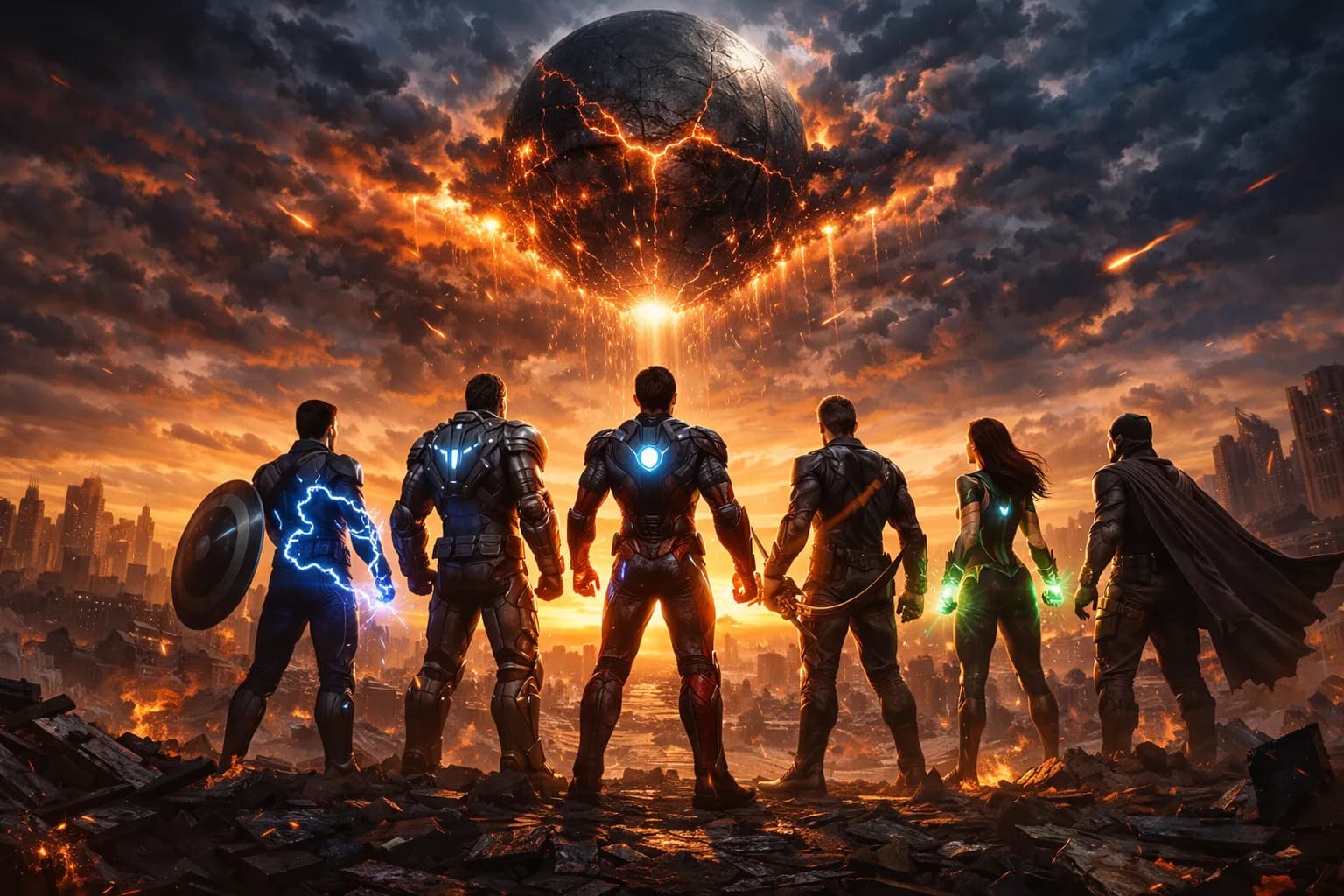
Avengers: Endgame is returning to cinemas as Avengers: Endgame Encore on 25 September 2026, ahead of Avengers: Doomsday. The special presentation will include an exclusive look at the next Avengers film, while IMAX and Infinity Vision screenings will offer an additional preview - making the rerelease both a celebration of the Infinity Saga and a bridge to Marvel’s next major event.
But the reason Endgame remains essential is not simply its scale, its cast or its climactic battle. The film became a record-breaking global event because it understood a core filmmaking principle: audiences remember what characters do, what they lose and what they choose - not just what they are told.
What Is Avengers: Endgame Encore?
Disney has confirmed that Avengers: Endgame Encore begins its theatrical run on 25 September 2026. Every screening includes an exclusive look at Avengers: Doomsday, while audiences attending IMAX and Infinity Vision-certified screenings will receive an additional sneak peek.
Marvel has officially described the event as a special return of the Infinity Saga finale, but has not publicly detailed the exact nature, placement or duration of all added material. Reports have suggested revised shots and new material, yet those specific claims should be treated as unconfirmed until the rerelease arrives in cinemas.
The immediate reason to revisit Endgame is clear: Avengers: Doomsday is scheduled for theatrical release on 18 December 2026.
The Box Office: A Verified Historic Success
Calling Avengers: Endgame one of the biggest box-office films ever is factually accurate. Its worldwide theatrical total reached $2.799 billion, including approximately $858.4 million in the United States and Canada and $1.941 billion internationally.
The scale of its launch was equally extraordinary. The film earned approximately $1.2 billion globally in its first five days, becoming the fastest film at the time to pass the $1 billion milestone worldwide.
Yet box-office history does not explain audience emotion on its own. Films become events when the public feels that missing the experience would mean missing a shared cultural moment. Endgame transformed more than a decade of storytelling into that kind of appointment viewing.
Why Endgame Worked in the First Place
The Marvel Cinematic Universe had spent 21 preceding films introducing heroes, building relationships and creating consequences. Endgame did not need to stop and explain every emotional connection from the beginning. It could trust the audience to bring its own memory of Tony Stark, Steve Rogers, Natasha Romanoff, Thor, Bruce Banner and Clint Barton into the cinema.
That trust gave the film its emotional power.
Instead of treating the story merely as a mission to defeat Thanos, Endgame begins with the aftermath. The opening atmosphere communicates grief, absence and exhaustion through empty spaces, fractured communities and characters struggling to move forward. The premise is understandable: the heroes failed in Avengers: Infinity War. But the human weight comes from behaviour.
- Steve Rogers runs a support group rather than leading an army.
- Natasha keeps the Avengers network functioning while carrying the burden of responsibility.
- Thor retreats into isolation and self-destruction after failing to stop Thanos.
- Clint’s grief becomes rage and turns him into Ronin.
- Tony chooses family life over another impossible war—until he realises that he cannot ignore the chance to repair what was broken.
Those choices tell the viewer who these people are after defeat. The film does not have to announce that grief has changed them; it lets their actions, settings and relationships make the change visible.
Show, Don’t Tell: The Rule in Action
“Show, don’t tell” does not mean that characters should never speak about their feelings or explain plot information. Cinema needs dialogue, especially in a story involving time travel, quantum mechanics and decades of comic-book continuity.
The principle means that filmmakers should choose dramatic evidence over abstract explanation whenever possible. Rather than writing, “Tony Stark has become a father and is afraid to lose his new life,” the film lets viewers see him with Morgan, observe the ordinary warmth of his home and recognise what a return to the Avengers could cost him.
Rather than having Steve Rogers state, “I still believe in people,” the story places him in a circle of survivors and lets his commitment to helping others show his values.
Showing Emotion Instead of Explaining It
A character’s grief becomes more powerful when the film lets the audience witness its effects rather than having the character simply declare, “I cannot get over what happened.” The hero might avoid a place connected to the person they lost, keep returning to an object that carries a memory, or make a decision clearly shaped by an absence they cannot escape. The emotion is never named directly, yet the audience understands it.
The same applies to friendship. Saying, “We have been through so much together,” communicates information, but it does not create the feeling of a shared past. A stronger scene may show two friends completing each other’s thoughts, repeating an old ritual, reacting instinctively to a private joke or understanding a silent gesture without needing an explanation. Their connection becomes visible through familiarity.
Character change should also be demonstrated through action. Instead of writing a line such as, “I am not the same person anymore,” place the protagonist in a situation that resembles an earlier crisis and let their response reveal the difference. Perhaps a character who once ran away now stays, someone who always chose self-preservation now accepts responsibility, or a previously reckless hero pauses long enough to protect another person. The audience recognises growth because it sees the contrast.
Personal stakes work in exactly the same way. “Everything matters to me” is a broad statement; it gives the viewer no concrete reason to feel what is at risk. A more cinematic approach shows the hero risking or sacrificing something specific that the audience has already learned to value: a family relationship, a promised future, a hard-won home, a treasured object or a chance at redemption. Once the story has established what matters, the character’s choice gives those stakes meaning.
Endgame uses this approach repeatedly. The final battle is visually immense, but its impact comes from personal visual beats: Captain America lifting Mjolnir; the portals opening as allies return; Peter Parker reconnecting with Tony; Clint and Wanda confronting loss; and Tony making the final decision that ends the conflict.
Each beat works because it pays off character information established over time.
The Comic-Book DNA Behind the Film
Avengers: Endgame is not a direct adaptation of one comic-book storyline. Instead, it combines ideas, characters and visual motifs drawn from several chapters in Marvel Comics history.
Thanos and the Infinity Gauntlet
The most obvious source is The Infinity Gauntlet (1991), written by Jim Starlin with art by George Pérez and Ron Lim. In that comic event, Thanos gathers the Infinity Gems, uses the completed Gauntlet to erase half of all life and provokes a cosmic-scale conflict.
The MCU adapts the central premise-the universe-altering snap and the desperate effort to undo it - but makes crucial changes. In the comics, Thanos’ motivation is linked to his obsession with Mistress Death; the films replace that with his distorted ideology of resource scarcity and “balance.” The change gives the cinematic version a different moral logic, even as the Infinity Stones and the snap remain recognisably connected to the comic event.
The Time Heist and Avengers Forever
The “Time Heist” has no single one-to-one comic equivalent, but it reflects the long Marvel tradition of using time travel to force heroes to revisit, reinterpret and confront their own histories. Kurt Busiek and Carlos Pacheco’s Avengers Forever (1998–1999) is one important reference point: it brings Avengers from different eras together in a time-spanning story about legacy, fractured continuity and the meaning of the team.
In Endgame, revisiting earlier MCU films is more than fan service. It turns the franchise’s past into the emotional material of the present. The trip back to 2012 lets the audience see the original Avengers through the eyes of characters who have been transformed by everything that followed.
Captain America, Mjolnir and Worthiness
Captain America wielding Thor’s hammer is one of the film’s most celebrated comic-book images. Steve Rogers first lifted Mjolnir in Thor #390 (1988), during Walter Simonson’s run, although he later stepped back from the moment because he felt Thor should be the one to wield it.
The scene in Endgame is a masterclass in setup and payoff. Avengers: Age of Ultron had already established Steve’s near-worthiness when the hammer moved slightly during the Avengers’ party. Years later, the sound of Mjolnir rising behind Thanos becomes the entire explanation. The image tells the audience everything: Steve is worthy, Thor is relieved, and the balance of the fight has changed.
No speech could have achieved the same effect.
The Final Battle and Secret Wars
The all-heroes battle at the end of Endgame recalls the large-scale collision of Marvel characters associated with Secret Wars (1984–1985), created by Jim Shooter, Mike Zeck and Bob Layton. The comic series brought heroes and villains from across the Marvel Universe to Battleworld, creating a template for crossover storytelling on an unprecedented scale.
The final charge in Endgame is not an adaptation of that storyline, but it embraces the same comic-book pleasure: the impossible sight of many heroes sharing one battlefield, each bringing different histories, powers and emotional stakes.
That tradition matters as Marvel approaches Avengers: Doomsday. Doctor Doom is one of Marvel Comics’ most important villains, particularly in stories involving the Fantastic Four and later Secret Wars narratives. However, audiences should avoid assuming that every comic event will be adapted directly. Marvel Studios frequently borrows themes, characters and images while reshaping the stories for the screen.
The Filmmaking Lesson: Payoff Is Earned
The greatest lesson from Endgame is not “make a bigger final battle.” It is: build emotional equity before demanding emotional payoff.
The portal sequence succeeds because the audience knows who is arriving and what their return means. Tony’s final action works because the story has shown his journey from self-preservation to responsibility across multiple films. Steve’s ending works because the film has repeatedly returned to his tension between duty and a life he never fully got to live.
For screenwriters and directors, this can apply at any budget level:
- Introduce a meaningful object, relationship or fear early.
- Return to it through action rather than repeated explanation.
- Put the protagonist under pressure to make a difficult choice.
- Let the climax force a visible decision.
- Give that decision a consequence the audience can feel.
A short film can achieve the same principle with one character and one room. A protagonist who repeatedly ignores a voicemail from a parent can reveal emotional conflict without an explanatory monologue. In the climax, answering or deleting the message becomes the story’s visual decision.
That is show, don’t tell: not less emotion, but emotion translated into cinematic behaviour.
Why It Still Matters Before Avengers: Doomsday
The return of Endgame is an opportunity to revisit why the film became a defining blockbuster: it combined spectacle with accumulated character storytelling. Its events were vast, but its strongest moments remained specific: a hand on a shoulder, a remembered promise, a weapon lifted at the right moment, a choice made when there is no painless option.
Avengers: Doomsday arrives in cinemas on 18 December 2026, and Endgame Encore offers fans a theatrical path back into the Avengers experience before that next chapter begins. The official special presentation starts on 25 September and includes a Doomsday preview; IMAX and Infinity Vision audiences will receive an additional look.
Learn to Build Visual Stories
Suppose you want to write scenes that audiences experience rather than understand; study the craft behind visual storytelling. Show, Don’t Tell by AL FENDERICO is a practical handbook for aspiring screenwriters, producers and directors, designed to help creators move from an initial idea to a producible, audience-focused film project.
The book explores visual storytelling, screenplay development, pitching, casting, budgeting, legal and production considerations, and the path from development to distribution-because a strong story needs both creative clarity and a practical plan to reach the screen.
Before the next Avengers assemble, develop the filmmaking tools to make your own story matter. Discover and buy Show, Don’t Tell at showdontellhandbook.com. |